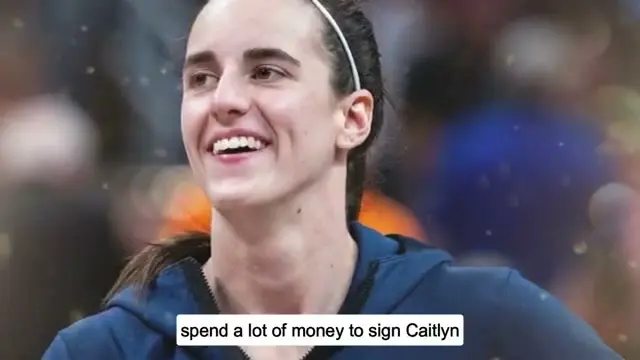
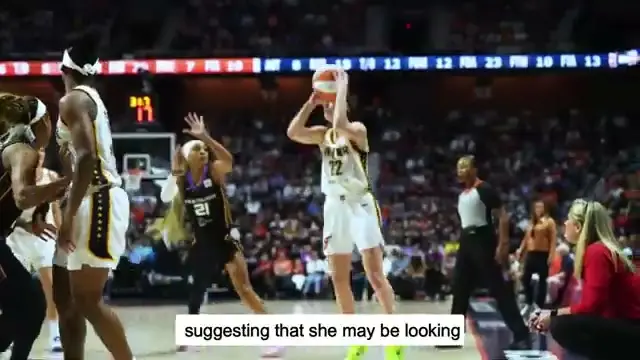
Panic has officially gripped the executive offices of the WNBA in New York City.
Veterans, union representatives, and league officials who once thought they could dictate terms to the sports world are suddenly facing a chilling reality.
For twelve straight months, the WNBA Players Association and its high-profile veterans have stepped in front of national television cameras with sky-high demands.
They looked at billionaire team owners and declared that they are the true drivers of the league's rising popularity.
They demanded luxury charter flights, massive salary increases, and most importantly, a complete dismantling of the collective bargaining agreement in favor of an NBA-style 50-50 revenue split.
Cat Engelbert and league executives li,kely assumed that announcing expansion teams in cities li,ke Philadelphia and Detroit would bring universal celebration.
They thought players would be thrilled with minor adjustments, believing that the historic two-point-two-billion-dollar media rights deal meant endless financial leverage.
However, the veteran leadership made a fatal miscalculation.
They forgot that billionaire owners can read television ratings and Nielsen charts just as easily as anyone else.
They forgot that corporate sponsors follow individual stars, not collective ego.
Now, those billionaire owners have officially drawn a terrifying line in the sand.
The WNBPA made a massive, public gamble by opting out of their existing labor contract.
They flooded the media with declarations that they would never step onto a basketball court again unless the league completely restructured its financial model to hand over millions more in revenue.
They pointed to massive sold-out arenas, record merchandise sales, and the lucrative new media agreements with ESPN, Amazon, and NBC.
They looked straight into the cameras and argued that a rising tide lifts all boats and that it was time to cash in.
Yet when union representatives walked into those sterile, cold boardrooms to demand their multi-million dollar payouts, the billionaire owners did not flinch for a single second.
Instead of handing over a blank check, the owners opened their briefcases and dealt a devastating financial blow to the players association.
Owners slid high-definition photos across mahogany tables depicting black tarps covering thousands of empty seats during the WNBA Finals.
They brought out secondary market ticket receipts showing championship tickets selling for a meager and embarrassing eight dollars.
They brandished official Nielsen television ratings proving a catastrophic seventy-seven percent drop in viewership the exact moment Caitlin Clark exited the postseason.
The billionaire owners looked union representatives straight in the eye and delivered a ruthless wake-up call.
They pointed out that without Caitlin Clark on the floor, the championship series could not even fill arenas without resorting to black plastic bags over empty seats.
They noted that playoff tickets were cheaper than stadium hot dogs and that television ratings plummeted from nearly three million down to four hundred thousand viewers.
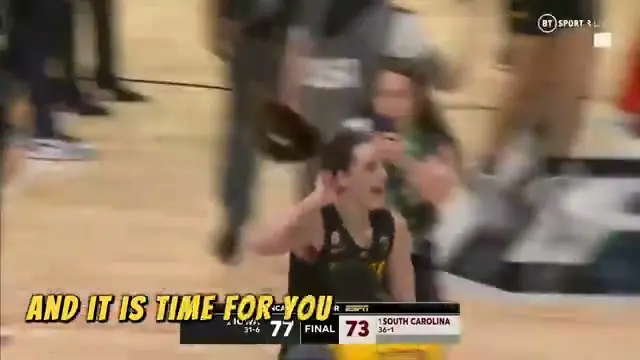
Mathematically, the veteran players held virtually no leverage at all.
Before Caitlin Clark arrived, the WNBA was hemorrhaging massive amounts of money, operating at annual deficits of forty to fifty million dollars while the NBA heavily subsidized its survival.
Now, the league finally possesses a generationally viable, billion-dollar asset capable of turning a sustainable profit.
Yet the owners are unwilling to hand over a fifty-fifty revenue split to a roster of players who have repeatedly alienated the exact fan base paying for the tickets.
Owners are fully prepared to institute a comprehensive lockout.
They are ready to cancel games, close arena doors, suspend all player salaries, and halt the upcoming season entirely if the players union refuses to accept realistic financial terms.
Yet while the rest of the league panics over the very real prospect of missing paychecks, Caitlin Clark remains completely insulated from any financial fallout.
Consider the sheer, terrifying power of the off-court empire that Caitlin Clark commands.
If billionaire owners suspend operations and halt the WNBA season, Angel Reese and A'ja Wilson face immediate financial vulnerability.
Veterans relying heavily on WNBA base salaries and basic endorsement deals would see their income freeze overnight, forcing them to rush back to the negotiating table.
But what happens to Caitlin Clark if the WNBA shuts down completely?
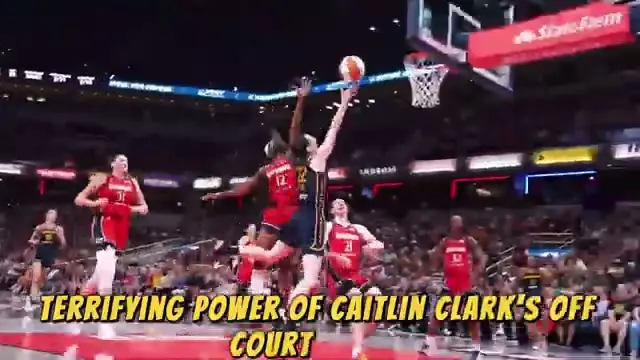
Absolutely nothing.
She does not lose a single penny of her overall net worth.
While her maximum base rookie salary from the WNBA sits below one hundred thousand dollars, she pulls in an estimated twenty-eight million dollars annually from signature footwear deals with Nike.
She commands multi-million-dollar partnerships with State Farm, Gatorade, and Panini.
A simple appearance at an LPGA Pro-Am golf event instantly generates massive investment deals from major corporations.
If the WNBA closed its doors tomorrow, Caitlin Clark could simply wake up, drink a cup of coffee, film a lucrative commercial, appear on national television, and remain the undisputed center of the global sports and entertainment universe.
She does not need the WNBA or its modest salaries.
She operates as a self-sustaining global economic powerhouse.
This unprecedented financial independence makes Caitlin Clark the most dangerous and untouchable weapon in the history of sports labor negotiations.
The players association cannot pressure her into joining their protests because she does not rely on their collective bargaining agreement.
The league cannot threaten her with fines or suspensions when her corporate backing dwarfs the entire front office.
Billionaire owners are fully aware of this dynamic.
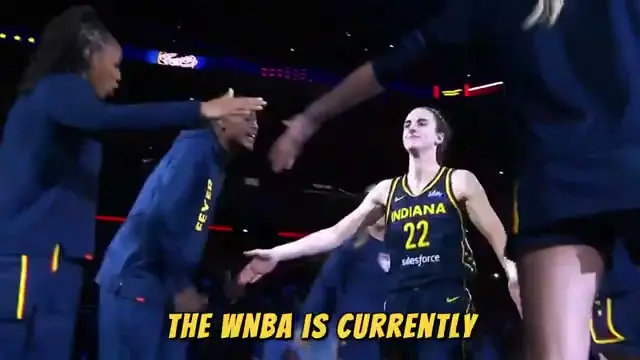
They know that if they lock out the players, the veterans will quickly face financial desperation and be forced to cave to ownership demands.
They know that Caitlin Clark will simply enjoy a multi-million-dollar vacation while waiting for the dust to settle.
The ownership group holds the union in a permanent chokehold.
They are looking at the veteran leadership and refusing to pay NBA-level wages for a minor-league television product.
The extreme arrogance of the WNBA veteran class has officially backfired.
After spending an entire year biting the hand that feeds them, mocking opponents, and complaining to the media about perceived slights, the final bill has finally come due.
Corporate sponsors are packing up their checkbooks and following Caitlin Clark to the golf course.
Broadcasters are demanding financial compensation for the catastrophic ratings freefall witnessed during the finals.
The WNBA currently stands on the absolute brink of total collapse, with the upcoming season in critical jeopardy.
If the veteran players cannot set aside their fragile egos, humble themselves immediately, and accept the brutal economic reality that they are immensely fortunate to orbit the same television universe as Caitlin Clark, the billionaire owners will not hesitate to pull the plug.
The WNBA is a business, not a charity, and no enterprise can survive when a faction of employees actively sabotages the marketability of its product.
Watch full video here: